Aboriginal education
Find out why Aboriginal education can be challenging on both ends: Balancing a way in two cultures or teaching Aboriginal studies to Aboriginal and non-Aboriginal students.
Selected statistics
-
60% - Percentage of Aboriginal children significantly behind non-Aboriginal children by the time they start Year One. [1]
-
40% - Percentage by which an Aboriginal student's chance of employment rises if they complete Year 10 or 11. Completing Year 12 increases employment prospects by a further 13%. [2]
-
36% - Percentage of people in remote communities have access to a library. [3]
-
40% - Percentage of the Northern Territory's school-aged population who is Indigenous. Same rate for all of Australia: 4%. [4]
- 9,700
- Number of Aboriginal students enrolled in public schools in 2014; same figure for 2005: 7,000. [5]
- 1,642
- Number of Aboriginal students enrolled in preschool in 2014; same figure for 1999: 869. [5]
-
10.4% - Unemployment rate for Aboriginal adults reaching Year 12 education level. Same rate for non-Aboriginal adults: 3.6%. [6] There is no difference for adults with a university degree.
-
24% - Percentage of people in remote communities have a school that goes up only to Year 12. 29% have a school up to year 10. [3]
-
66.7% - Percentage of Year 10 Aboriginal students in Queensland who go on to complete Year 12, compared to 83% among non-Aboriginal children. [7]
-
59% - Percentage of Aboriginal students who completed Year 12 in 2014. [8] Figure for 2008: 21%, for 2002: 18%; [9] figure for non-Aboriginal people in 2014: 85%, [8] for 2008: 54%. [9]
-
10% - Percentage of Aboriginal children who graduate from Year 12. [10]
-
94% - Percentage of Aboriginal children who earned a Year 12 certification in Queensland in 2015; figure for non-Aboriginal students: 95%. [7]
-
85.5% - Retention rate of Aboriginal students in government schools for 2014. [5] Figure for 2008: 46.5%, [11] 1995: 30.7%. [11]
-
40% - Percentage of Aboriginal people with a vocational or higher education qualification in 2008. Same figure for 2002: 32%; for the non-Aboriginal population in 2008: 65%, in 2002: 49%. [12]
-
64% - Preschool enrolment rate for Aboriginal children in 2009. [13]
-
1% - Proportion of all teachers in Australia in 2015 who were Aboriginal. [14] Figure for 2004: 0.7% [15]
- 20
- Number of Aboriginal medical graduates in 1998. Aboriginal doctors practising today: 150. [16]
-
5.3% - Percentage of school students in 2015 who identified as Aboriginal. [14]
List of articles
Aboriginal Australia Information Deficit Syndrome (AAIDS)


Aboriginal knowledge for the science curriculum

Aboriginal literacy rates

Aboriginal students in higher studies at university

Barriers to Aboriginal education

Can an Aboriginal school break the vicious circle?

Can remote Aboriginal schools compete?

Deep listening (dadirri)

Education for non-Aboriginal students

How do I start learning about Aboriginal culture?

How to improve Aboriginal literacy & school attendance

How to prepare yourself to teach Aboriginal studies
Preparing your visit & travel to Aboriginal Australia

Starving for English, starving for Maths

Teacher resources to match the Australian cross-curriculum priorities

Two days in November
Ultimate list of things to do to support Aboriginal culture

Ways of teaching & engaging Aboriginal students

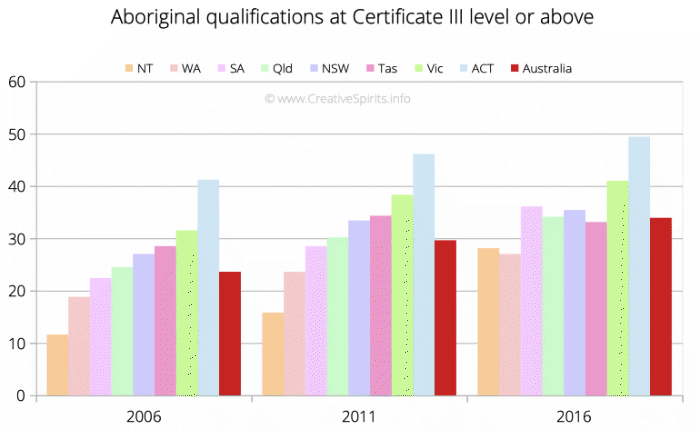
Qualifications of Certificate Level 3 and above
While a smaller proportion of Aboriginal people attain a qualification of Certificate Level 3 and above, their proportion is rising much faster than that of non-Aboriginal students.
Education is the greatest single weapon to overcome disadvantage and the impact of this denial of education affects me and other Indigenous people to this day.
— Yvonne Butler, Aboriginal woman [18]
How the government cheats at educational targets
Education is a key issue raised by many Aboriginal community leaders and parents. Australian state and territory governments are watched closely what they do and achieve in Aboriginal education.
When the Northern Territory government set educational targets in a budget paper in May 2011 it grossly reduced minimum reading and writing standards for Aboriginal students compared to standards for non-Aboriginal students. [19]
| Aboriginal students | Non-Aboriginal students | |
|---|---|---|
| Student attendance | 34% | 98% |
| Year 5 minimum reading standards | 36% | 88% |
| Year 5 minimum writing standards | 33% | 89% |
Federal Shadow Indigenous Affairs Minister Nigel Scullion described the targets as "disgraceful" and asked how it could be acceptable "that the NT Government can consider reaching their educational targets when it is expected that two-thirds of Indigenous students will not attend school in the first place and a further two-thirds of the kids in primary school will leave with poor or unsatisfactory reading and writing skills." [19]
Aboriginal teachers
Education has always been central to Aboriginal economic, social and cultural development. A good education determines an Aboriginal child's health, literacy, employment, social status and productivity.
Aboriginal children learn best and most efficiently when taught by a culturally-aware teacher, preferably an Aboriginal teacher. [20]
Aboriginal teachers bring a wider range of cultural perspectives into schools and develop networks with the Aboriginal communities around the school, a valuable asset when addressing school children's needs or problems.
Research also shows that Aboriginal students are more engaged and skip school less if their teacher is also Aboriginal. Rachel Bos, a Kaurna woman and teacher, recalls a male Year 12 student who never had a teacher encourage him to tell his own perspective. "He'd never had a teacher tell him that his voice was powerful; that his personal experience as an Aboriginal young man was a powerful perspective," she says. [21]
But non-Aboriginal students could equally benefit from Aboriginal teachers. "If Aboriginal teachers could work in every school, a student would be able to relate to Indigenous people as part of the current community, not a 'problem' in the media," observes arts student Alannah Kirby. [22]
A major challenge of Aboriginal teachers remains racism and stereotyping. One Aboriginal teacher interviewed 30 peers in Queensland and found that around three-quarters told her they hide their cultural background at school. Their reasons vary from feeling "culturally unsafe around staffrooms", anxiety about being labelled, being a lone active voice for their culture, or to defend certain positions (e.g. changing the date of Australia Day). [21]
In 2015 only 1 in 100 teachers were Aboriginal, [14] a marginal increase from 0.7% in 2004. [20]
[The graduate student] told me in this letter that I was the first Aboriginal woman that's taught her, and that she is so proud of the culture now.
— Rachel Bos, Kaurna woman and teacher [21]
Aboriginal scholarships
An increasing number of Aboriginal students attend private boarding schools thanks to scholarships that are available to them. In 2013, 3,000 Aboriginal students were enrolled in boarding schools in Australia. [23]
- Not-for-profit organisation Yalari offers Aboriginal scholarships since 2005 and grew from 5 graduates in 2010 to 169 students on scholarships in 2017.
- The Australian Indigenous Education Foundation's scholarship program grew from one student in 2008 to almost 300 in 2012.
- St Joseph's College at Hunters Hill was one of the first metropolitan boarding schools to introduce an Aboriginal program. It has between 30 and 40 Aboriginal students each year, about 5% of its boarding population.
- Wesley College in WA also offers scholarships for Aboriginal students and a dedicated education program called Moorditj Mob. The program is an important part of the College’s culture and fosters great pride within the Wesley community.
Boarding can be life-changing for Aboriginal students, especially if they are coming in from a rural or remote environment. For some it will be the first time they are sleeping in a room by themselves in a bed without any siblings, playing football on a grass oval instead of hard red dirt, or going to sleep without any barking dogs. [23]
Teacher and student resources
Books
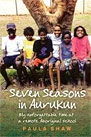
Seven Seasons in Aurukun details the experiences a young non-Aboriginal teacher makes teaching at an Aboriginal community school and making a life for herself in a challenging new world.
It is a taste of the intensity of relationships in a small community where community leaders try to improve their circumstances and maintain culture.
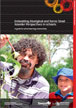
Embedding Aboriginal and Torres Strait Islander Perspectives in Schools (EATSIPS) is a resource to give educators knowledge, understanding and skills to better support Aboriginal students and further integrate Indigenous perspectives into the Queensland curriculum.
Honey Ant Readers

Margaret James has such a passion for teaching reading and for early childhood education that she created an experiential, research-based reading program for Aboriginal learners.
She developed the program in collaboration with, and at the request of, Aboriginal elders and educators.
The Honey Ant Readers were motivated by a desire to improve print literacy levels of Aboriginal Australian students particularly in remote areas. Books have been translated into 6 traditional Aboriginal languages.
Crackerjack Education
Crackerjack Education offers digital and static resources for primary schools around Australia that match each Aboriginal code of the Australian Curriculum.
You can search resources by year level (Year 1 to Year 6), subject (Maths, English, Science and History) or topic (Language, Dreaming stories, cultural maths, cultural knowledge, poetry, songs and many more).
The site also sells resources in their online shop. Visit Crackerjack Education for more details.
National Centre for Indigenous Excellence
On 26 February 2010 then-Prime Minister Kevin Rudd opened the National Centre for Indigenous Excellence (NCIE) in Sydney's suburb Redfern. The NCIE is a centre for education, sports, arts and culture and aims to foster and develop talent in young Aboriginal students. Its four development pathways are Sport, Learning and Innovation, Culture and Arts, and Health and Wellbeing.
Up to 5,000 Indigenous students from around Australia are expected to pass through the centre each year. Most of the NCIE's staff are Aboriginal.
The NCIE is located at 180 George Street, Redfern, New South Wales. Website: www.ncie.org.au.
Traditional knowledge
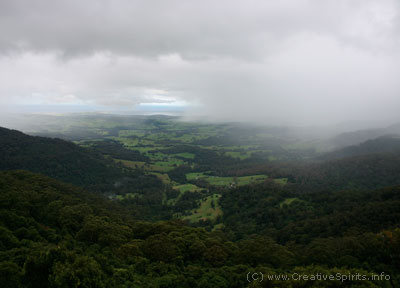
As you probably know before invasion Aboriginal people passed on knowledge only through stories, dances and images drawn into the sand.
"It would be a mistake, though, to say there is no written component to Indigenous transmission of knowledge, because Indigenous people use the land as their book," notes Ernie Grant, a Jirrbal Elder from far north Queensland. [24]
"How we got fire, animals, water, all these things are written in the land. If teachers coming from a literate culture can't understand how people from the oral tradition transmit information, we have hit an immediate snag [obstacle]."
Aboriginal knowledge vulnerable to exploitation
Imagine you are the keeper of traditional knowledge about the medicinal properties of a certain Australian plant. During a meeting with an acquaintance of yours you are sharing what you know.
A few weeks later you notice an overseas business advertising and selling this plant on their website. As you investigate, you find out that your acquaintance has passed on your knowledge to this company. You also find out that they are making thousands of dollars a month just from this product.
At present, there is nothing you could do to stop this company from exploiting Aboriginal knowledge because it is not protected. Need an example that's happening already and worth millions of dollars each year? Think cheap 'Aboriginal' boomerangs, manufactured in China and sold in Australia. Aboriginal artists are powerless to stop the torrent of these fake products.
